Julie Johnson – a Sewist from Cincinnati OH
As a Sewer, there are times when the measurements on a pattern don’t quite match up to your measurements. Our Dayton ASG Chapter invited Julie Johnson to our meeting to talk about measurements. Julie was able to show our members techniques and help the members get their exact measurements.
Julie used to teach high school social studies for Cincinnati Public Schools, and is now retired. She got started sewing seriously when she first started teaching because she wasn’t making much money and wanted to dress professionally. Starting with skirts, blouses and dresses, Julie graduated to tailored jackets. When she was finally making enough money to go to the better dress shops, all of the sizes were too large, so she continued sewing. During her sewing journey, measurements became increasingly important and how body measurements correspond to fit became increasingly clear.
Take a look below and see Julie’s presentation and talk on “Measurements: The Foundation for Making Clothes that Fit”.
Measurements: The Foundation for Making Clothes that Fit
Julie Johnson
September 15, 2025
Measurements and Patterns:
Accurate measurements will help ensure choosing the best sized printed pattern.
- Circumference measurements – Bust, Waist and Hips are the most common
given on a pattern envelope. - Additional measurements such as Back Waist Length, Front and Back
Armhole Width, Seat Depth, etc. are useful for fitting garments, but not
mandatory for choosing which pattern size to purchase. - Depending on the pattern (Big 4 or Independent) we may need to blend into
multiple sizes for an accurate fit for our body. - Printed or PDF patterns that are multi-sized can be confusing. Highlighting
the size(s) needed for cutting helps ensure getting the right initial size for
fitting.
Big 4 and some Independent Patterns are based on a standard Sloper/Block/Basic
- This sloper/block/basic for the Big 4 is based on statistical averages that are
unique to each company. - There is no universal standard used by the different pattern companies.
- Only 2% of the population can take a Big 4 pattern and sew it up and have it
fit right out of the pattern envelope. - Some Independent Pattern Makers (e.g. Sandra Betzina) base their patterns
on measurements from currently measured people or perhaps their own fit
preferences. - Independent Pattern Makers may use slopers/blocks/basics based on measurements they believe make the most sense for the patterns that they make.
- Comparing our body measurements to the measurements given on a printed
pattern are essential in ensuring the fit we want in a garment. - We don’t have to like them, but we do have to know them to use them to
make the clothes we want fit the way we want.
Taking Advantage of the Pattern Envelope:
- 1. Depending on the company, the pattern envelope can provide a wealth of
information e.g. written descriptions, photos or line drawings may indicate the
general fit or silhouette the garment should have. The looser the fit description, the
more design ease has been included in the pattern. - Descriptions of how much ease is built into the garment design include terms such
as Close Fitting, Fitted, Semi-Fitted, Loose Fitting or Very Loose Fitting. The
specific amount of ease will vary from style to style. - The back of the envelope gives a chart of the body circumference measurements
intended for each pattern size. - Knowing your personal measurements and the intended ease of the garment can
help you decide which patterns to purchase and which size(s) to cut out.
Some pattern companies include finished garment measurements on the back of the envelope.
- Each pattern company is different in this regard. Many of the Big 4include the Back Length from the Base of the Neck, some may or may not include Lower Edge Width or Bust or Hip measurements.
- Other non-Big 4 and Independent pattern companies may or may not
include this information.
Taking Advantage of the Pattern:
- Some pattern companies include finished garment measurements on the pattern itself, if provided, they are usually found at the Bust, Waist and Hip.
- If finished garment measurements are NOT given, it may be necessary to go “Old School” and measure the pattern at our key body circumference points to determine the finished garment measurements.
- Remember to subtract seam allowances, pleats and darts!
- Remember that Finished Garment Measurements reflect the intended body
circumference plus wearing and design ease for the garment size.
What to Measure and Why:
- To get the best fit from the clothes we make, we need to know our measurements beyond the Bust, Waist and Hips.
- Bust, Waist and Hips are circumference measurements, which are important for fit, but not the whole story
- We also need length/distance measurements to assure that our clothes fit and allow our body to move comfortably
- Length/Distance measurements include Back Waist Length, Waist to Hip, Seat Depth, Front and Back Armhole Width, Shoulder to Waist, etc.
Why do we really need all these measurements?
To perfect the pattern to our unique body measurements and shape so the garment we are making will fit us well.
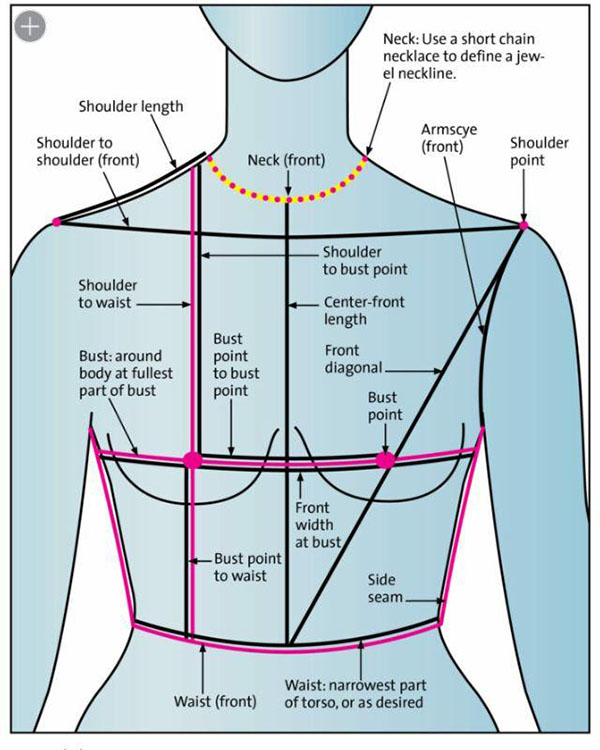
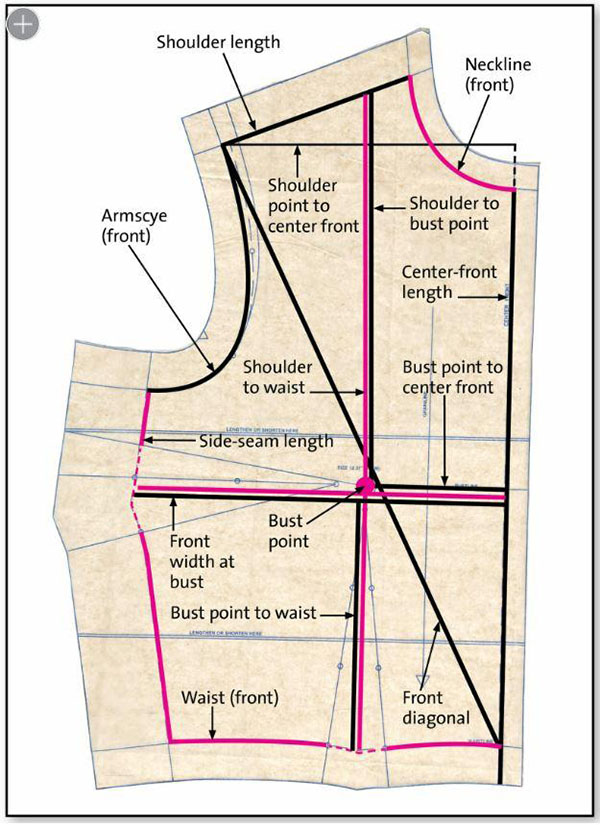
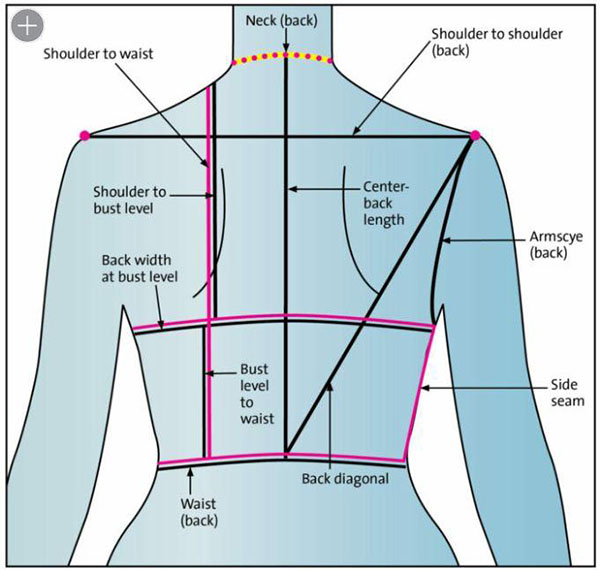
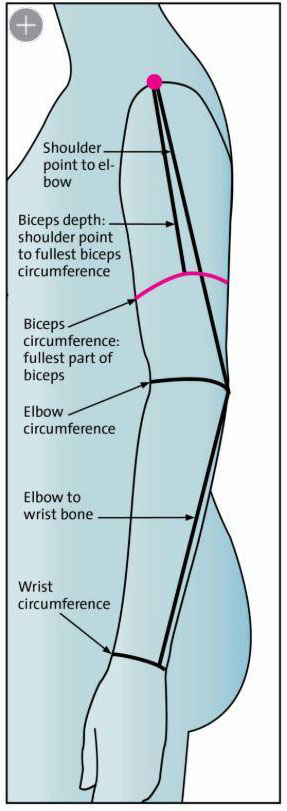
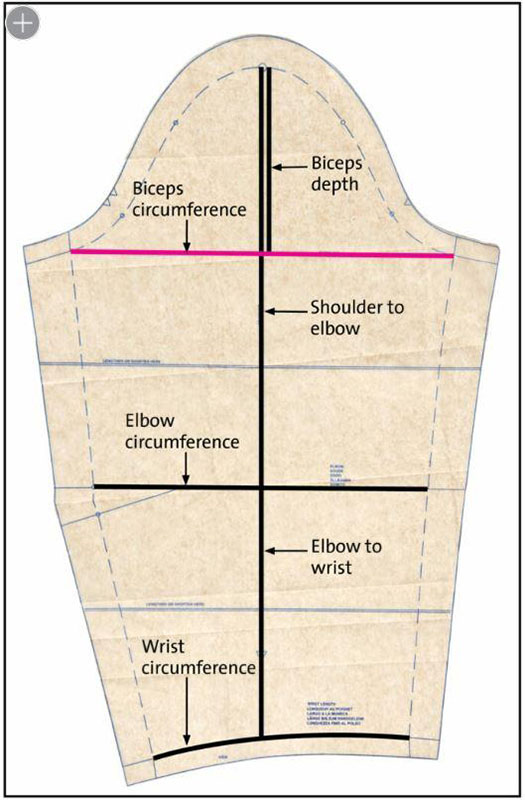
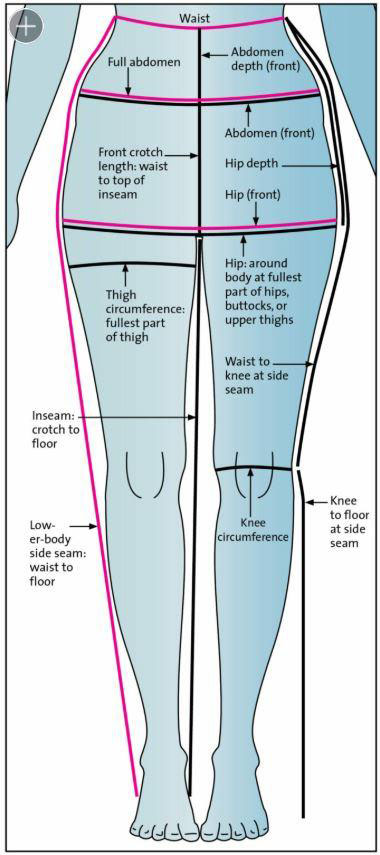
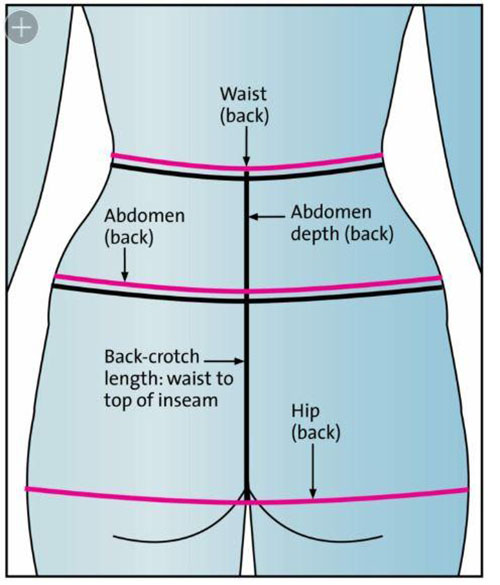
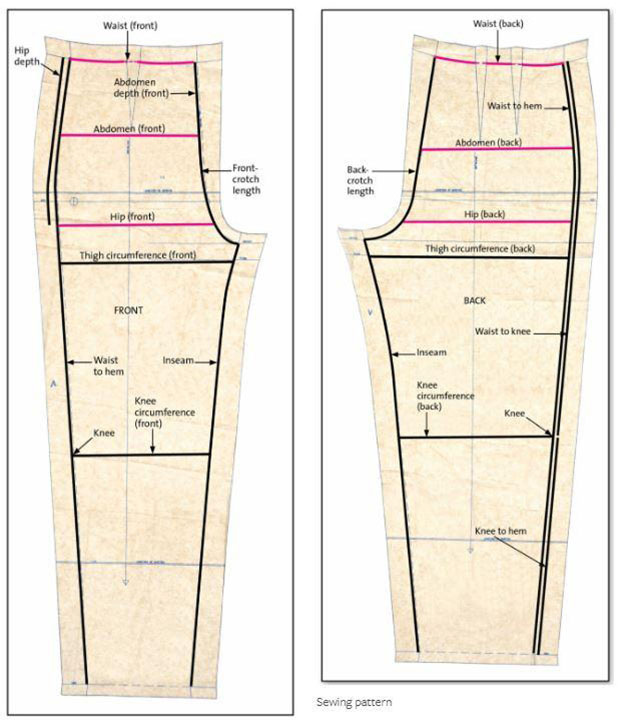
The following charts (from Threads Magazine, Essential Measuring Points for Fitting a Pattern, Issue 181, October/November 2015) may help show how the different measurements we take correspond to the pattern pieces we use in garment making.
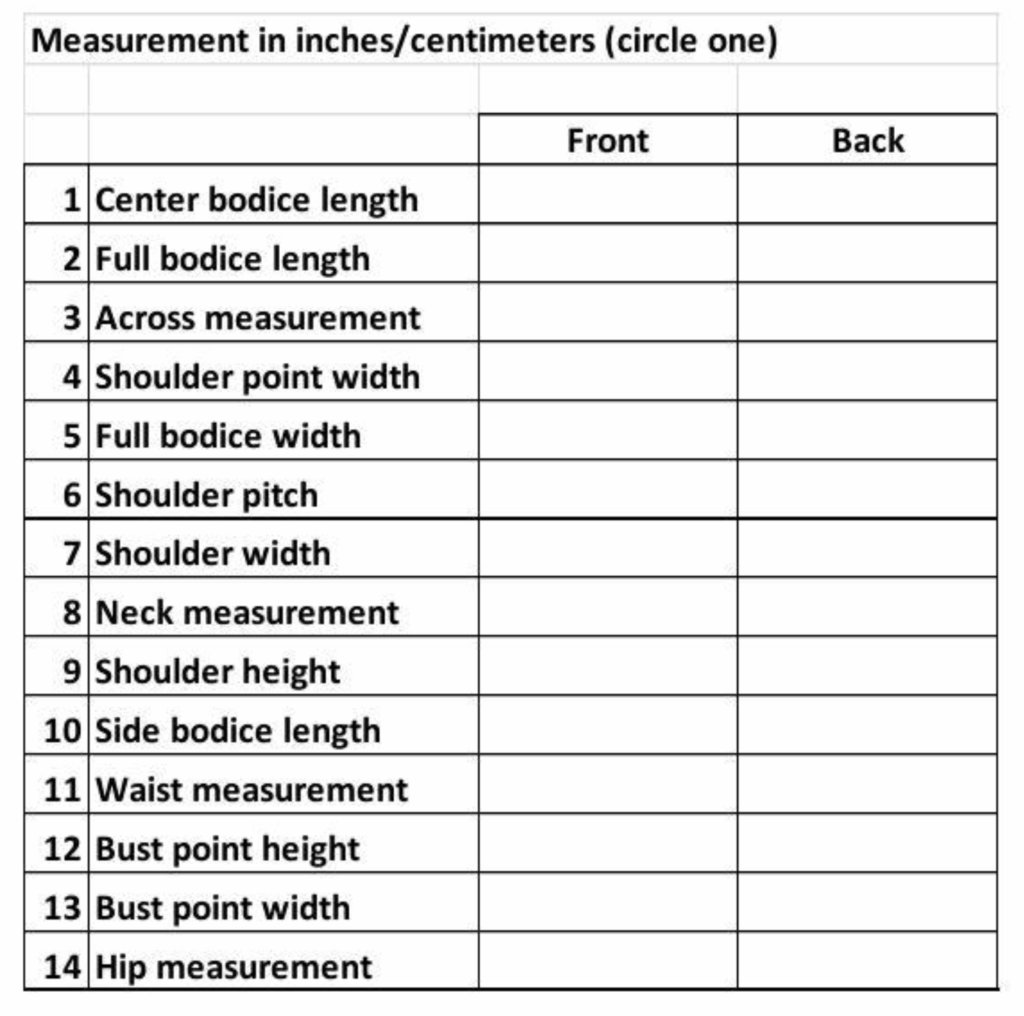
ASG Measurement Chart
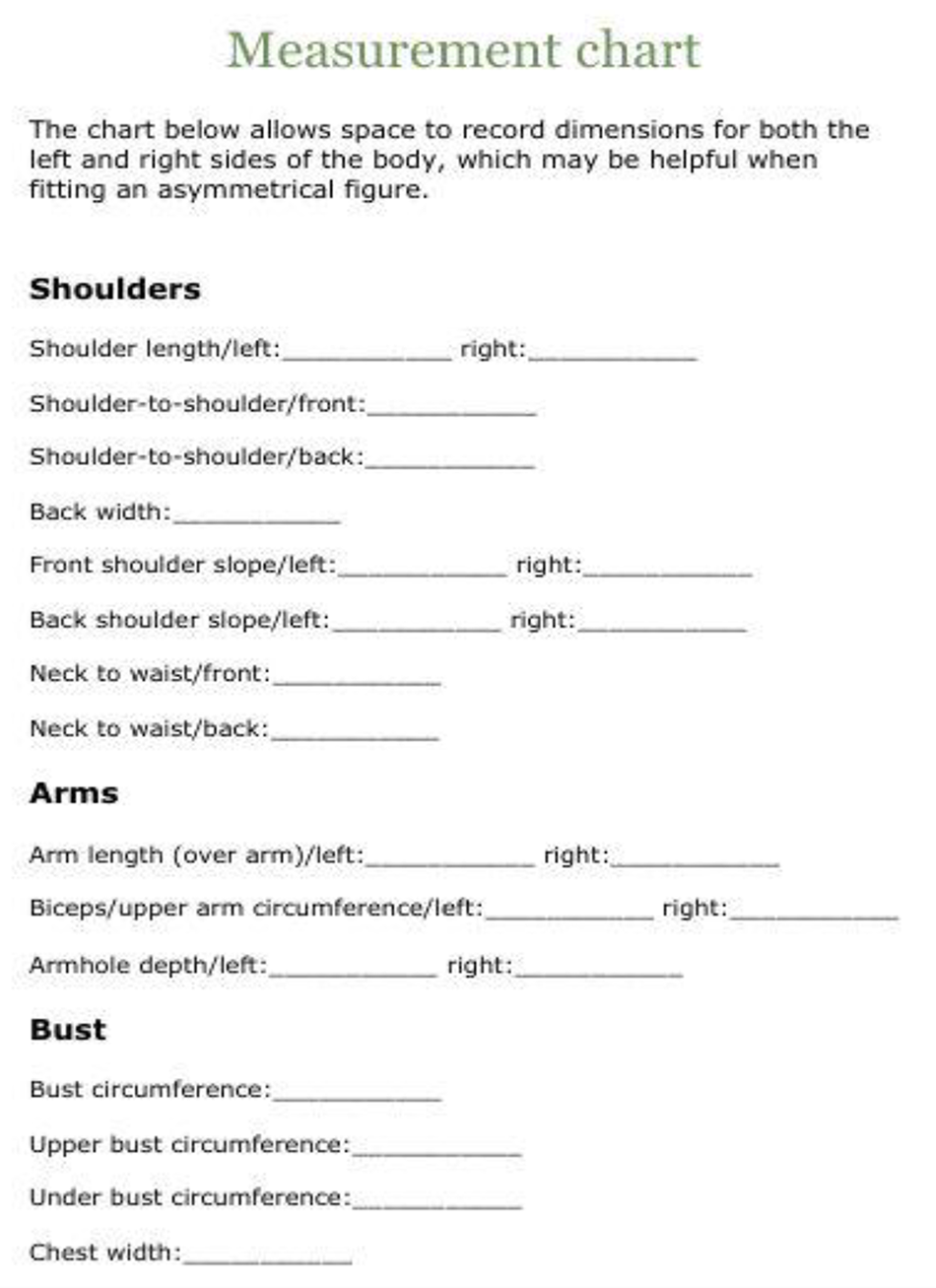
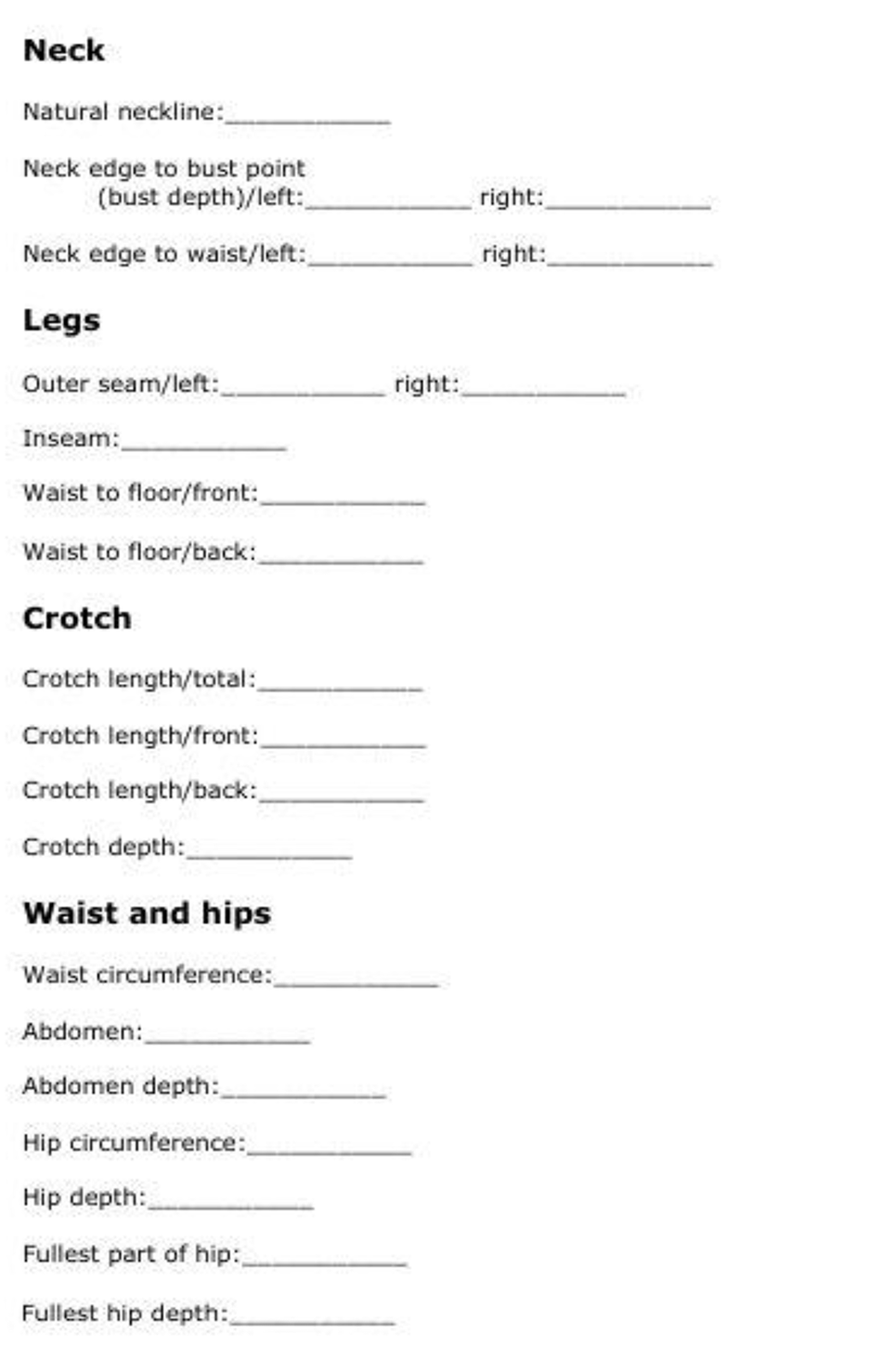
Measurement Chart
Which Measurement Chart Should I Use?
There are multiple measurement charts available in sewing books, online, and in our own library of resources. The ASG measurement guide (attached) is a useful resource as is the Threads Magazine measurement chart (attached). Personalized measurement charts are also good resources. The “right” measurement chart to use is the one that works for you for the garments that you make.
-Note: different charts may use different wording for the same measurement
Taking Measurements
Use the right tools: A friend to help you
a fine chain necklace (to find your natural neckline)
non-stretch tape measure, narrow elastic (to find your waistline),
a full-length mirror (if measuring yourself),
narrow tape
small adhesive dots
washable markers (to draw lines on skin and/or undergarments)
pins
a 12-inch ruler
a form-fitting T-shirt with set-in sleeves- to help identify an armhole
(optional) twill tape/cotton cording- for marking crotch length (optional)
Measurement chart (ASG, Threads or your personal Measurement Chart)
Start at the top of the body and work down
The Threads Magazine Website Fitting Section has a series of articles and videos for taking measurements and fitting techniques for a variety of garments and fitting issues.
http://www.threadsmagazine.com/category/fitting
Now What?
Perfecting the pattern to our body measurements is next. Comparing our body measurements to the measurements given on a printed pattern is essential in ensuring the fit we want in a garment. Ease generally refers to the amount of extra room for circumference measurements at Bust, Waist and Hips. If, for example, you have a dress that is designed for the bodice to drape a bit over a belt at the waist, that would be lengthwise ease and a design choice by the pattern designer.
How to find the amount of ease
Subtract the intended body measurement from the measurement of the pattern to
determine the amount of ease the pattern has in its unaltered state
– Pattern Measurement at X – Body Measurement at X = Intended Amount of Ease e.g. 40” – 34” = 6” ease
When perfecting the pattern, keep ease in mind…
– It is important to account for the amount of ease the designer intended for the garment we are making. In the above example, we have 6” of ease. If our body measurement is 37” instead of 34”, that gives us 3” of ease. There is room for the garment to fit, however, the garment will not fit the way the designer intended because the pattern as originally drafted and printed is designed for 6” of ease. The pattern will need to be perfected to allow for the 6” of ease as originally designed.
References and Resources
ASG Resources: www.asg.org
Measurement Chart: https://www.asg.org/files/resources/MeasurementChart.pdf
Ease Guide: https://www.asg.org/category/fitting/ – includes a hotlink to an ease fitting chart from the Plano, Texas ASG Chapter
Books:Your personal library of resources is the first place to look
Dunham, Gina Renee, The Fitting Book, Gina Renee Designs, 2021, Zurich.
Morris, Mary and McCann, Sally, Every Sewer’s Guide to the Perfect Fit, Lark Books, 1997, Asheville.
Websites:
Cashmerette (Sewing for Curves) Patterns Sizing Guide: (unique to this company)
https://www.cashmerette.com/pages/sizing
Threads Magazine: http://www.threadsmagazine.com
Articles:
Threads Magazine, How to Get Accurate Body Measurements, December/January 2006.
Threads Magazine, Essential Measuring Points for Fitting a Pattern, #181,
October/November 2015
Measurement Chart Hotlinks:
https://www.threadsmagazine.com/project-guides/learn-to-sew/how-to-measure-up
click on printable version near end of article
https://images.threadsmagazine.com/app/uploads/2015/02/28132112/TYTSBonus-Measurement-Chart.pdf
Video:
https://www.threadsmagazine.com/project-guides/learn-to-sew/mark-your-measurements
YouTube:
Intro to Body Measurements for Sewing Patterns with The Crafty Gemini
https://www.youtube.com/watch?v=ajdM2TqReh